Cart
0
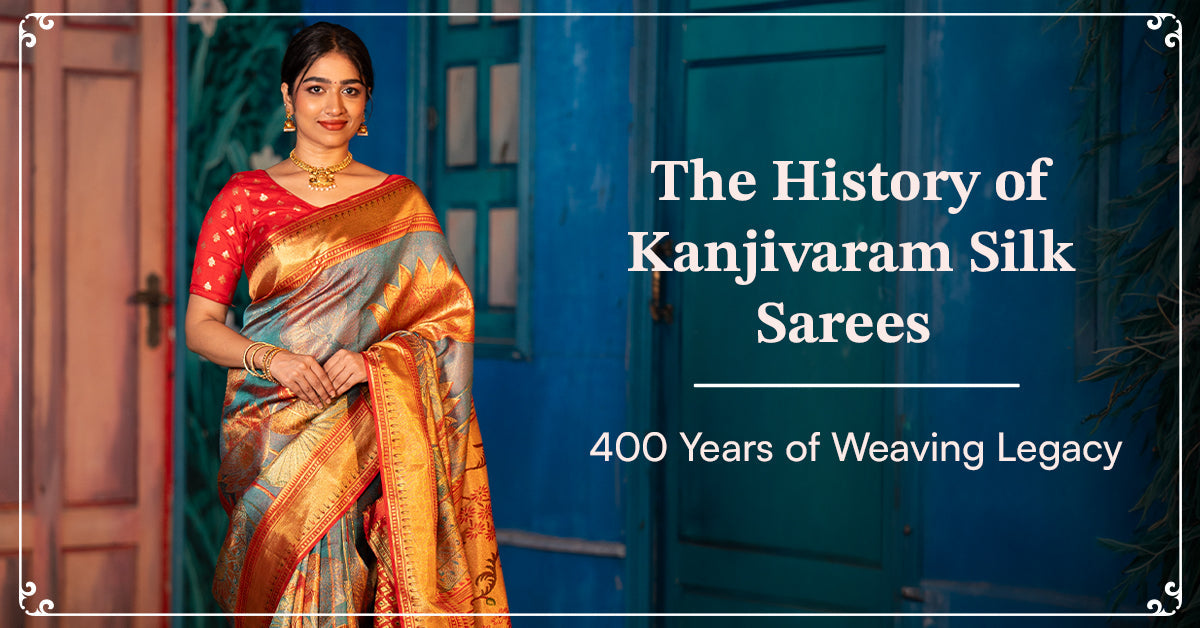
Kanjivaram silk sarees carry more than four centuries of South Indian weaving heritage, with their roots deeply connected to Kanchipuram in Tamil Nadu. Known for rich mulberry silk, detailed zari work, traditional motifs and distinctive borders, these sarees have become an important part of South Indian weddings, festivals and family traditions. The craft has evolved across generations while preserving the handloom techniques and cultural identity that make a Kanjivaram saree special.
What Is a Kanjivaram Silk Saree?
A Kanjivaram silk saree is a traditional silk saree associated with Kanchipuram, a historic temple town in Tamil Nadu. The sarees are known for their rich silk texture, vibrant colours, elaborate zari work and carefully woven borders and pallus.
The name Kanjivaram comes from the traditional name for Kanchipuram. Over generations, the town developed a strong reputation for silk weaving, with skilled weavers passing techniques from one generation to the next.
Today, Kanjivaram silk sarees remain a popular choice for brides, wedding guests and anyone looking for a saree connected to South Indian heritage.
The Origins of Kanjivaram Silk Weaving
The history of Kanjivaram silk weaving is closely connected with the cultural growth of Kanchipuram. The town has been an important centre of temples, art, religion and textile traditions for centuries.
The development of the Kanjivaram weaving tradition is often associated with communities of skilled weavers who settled in the region and brought established silk weaving knowledge with them. Over time, these techniques became closely associated with Kanchipuram.
The proximity of the weaving tradition to the region's temples also influenced the visual language of the sarees. Temple architecture, flowers, birds, leaves and traditional geometric forms became important sources of inspiration for woven motifs.

400 Years of Kanjivaram Silk Saree Heritage
Kanjivaram silk weaving has developed over roughly four centuries into one of India's most recognised handloom traditions.
During this long history, weaving families refined techniques for creating strong silk fabrics, distinctive borders and elaborate pallus. Knowledge was traditionally transferred through families and apprenticeships, allowing complex weaving methods to survive across generations.
The saree also changed with the preferences of different periods. Colours, motifs, border arrangements and zari patterns evolved, while the fundamental character of the Kanjivaram weave remained rooted in craftsmanship.
This continuity is one reason a traditional Kanjivaram silk saree is valued as a cultural heirloom rather than simply a piece of clothing.
How Kanjivaram Silk Sarees Are Woven
Traditional Kanjivaram silk sarees require considerable skill and attention throughout the weaving process.
The silk yarn is prepared before it is placed on the loom. The weaver then carefully works with the warp and weft to create the body of the saree. Borders, pallus and motifs require additional precision because each element must align correctly within the overall design.
One of the techniques associated with traditional Kanjivaram weaving is Korvai.
What Is Korvai Weaving?
Korvai refers to the traditional process of joining contrasting sections of a saree. In a Korvai Kanjivaram saree, the body and border can feature strong colour differences and are integrated through a specialised weaving technique.
The traditional process requires considerable coordination and skill. Snehalayaa Silks describes its Korvai Kanjivaram sarees as being created through the integration of the body and border using traditional weaving methods.
This technique contributes to the distinctive appearance that many people associate with classic Kanjivaram sarees.
Why Kanjivaram Sarees Are Known for Their Zari Work
Zari is one of the defining visual features of a traditional Kanjivaram silk saree.
Gold toned zari is woven into borders, pallus and motifs to create patterns inspired by traditional Indian design. Peacock motifs, floral forms, paisley designs, temple inspired patterns and geometric arrangements are frequently seen in Kanjivaram designs.
The combination of lustrous silk and detailed zari gives the saree its characteristic richness.
Snehalayaa Silks' Kanjivaram collection includes designs featuring floral, peacock, checked and traditional zari borders, demonstrating how these heritage elements continue to appear in contemporary saree designs.
Traditional Motifs Found in Kanjivaram Silk Sarees
Kanjivaram sarees are recognised for motifs that carry cultural and artistic meaning.
Peacock Motifs
Peacocks are frequently used in Indian textile traditions and represent beauty, grace and prosperity. Peacock designs are especially striking when woven into zari borders and pallus.
Floral Motifs
Flowers and vines bring a softer decorative element to the rich silk fabric. Floral zari patterns can appear throughout the saree or be concentrated around the border and pallu.
Temple Inspired Motifs
Temple architecture has influenced South Indian textile design for generations. Traditional temple inspired patterns can be seen in borders and decorative elements.
Paisley Motifs
Paisley forms are widely used across Indian textiles. In Kanjivaram sarees, they can be combined with floral and zari patterns to create elaborate traditional designs.
Geometric Designs
Checks, stripes and geometric arrangements provide a structured appearance. These patterns remain popular among saree buyers looking for a traditional design with a distinctive visual character.
Why Kanjivaram Silk Sarees Are Popular for Weddings
Kanjivaram silk sarees have a strong connection with South Indian bridal traditions.
Their rich silk, elaborate zari and traditional motifs make them suitable for wedding ceremonies, receptions, religious celebrations and other important occasions. Brides often select traditional colours such as red, maroon, green, pink and gold, while contemporary collections also include softer and more unusual shades.
The saree's cultural significance is equally important. A Kanjivaram saree may become part of a family's wedding memories and can be preserved and passed down through generations.
Snehalayaa Silks also describes Kanjivaram silk sarees as suitable for weddings, religious functions and traditional celebrations.
Kanjivaram Silk Sarees as Family Heirlooms
One of the most meaningful aspects of a traditional Kanjivaram silk saree is its connection with family history.
A saree purchased for a wedding may later be worn by another family member for an important celebration. Over time, the saree becomes associated with memories of weddings, festivals and family gatherings.
The durability of traditionally woven silk and the timeless nature of many Kanjivaram motifs make these sarees suitable for long term preservation.
For many families, owning a Kanjivaram silk saree is therefore connected with preserving a part of their cultural heritage.
Kanjivaram Silk Sarees in Modern Indian Fashion
Although the heritage of Kanjivaram sarees remains strong, modern designers and weavers continue to experiment with colours, motifs and styling.
Traditional red and gold combinations remain popular, while contemporary buyers increasingly explore shades such as lavender, sage green, peach, beige, teal and mustard.
Modern Kanjivaram sarees can also feature floral designs, multicolour weaving, checked patterns and updated border treatments. Snehalayaa Silks' current collection reflects this broader colour and design range.
This evolution allows younger generations to connect with the tradition while developing their own personal style.
What Makes a Kanjivaram Silk Saree Special?
Several characteristics contribute to the enduring appeal of Kanjivaram silk sarees:
-
Heritage associated with Kanchipuram
-
Traditional handloom weaving
-
Rich silk texture
-
Detailed zari work
-
Distinctive borders and pallus
-
Traditional South Indian motifs
-
Korvai weaving techniques
-
Strong association with weddings and celebrations
-
Long standing family and cultural value
These qualities have helped Kanjivaram silk remain one of India's most recognised traditional saree styles.
How to Choose a Kanjivaram Silk Saree
When choosing a Kanjivaram silk saree, consider the occasion, colour, weaving details, zari work, motifs and overall drape.
For a bridal saree, traditional colours and elaborate zari designs are popular choices. For wedding guests and festive occasions, softer colours and lighter designs can provide a more versatile option.
Pay attention to the quality of the silk, the neatness of the weaving and the finishing of the border and pallu. Buyers looking for an authentic traditional saree should also understand the difference between pure silk Kanjivaram sarees and other fabrics marketed using similar names.
Snehalayaa Silks offers pure Kanjivaram silk sarees made with mulberry silk and authentic zari, according to its customer FAQ.
Shop Kanjivaram Silk Sarees Online
For those looking to explore traditional and contemporary designs, Snehalayaa Silks offers a dedicated collection of Kanjivaram silk sarees.
The collection includes Korvai Kanjivarams, Kattam Kanjivarams, Butta Kanjivarams, Soft Silk Kanjivarams, Tissue Kanjivarams, Brocade Kanjivarams, Borderless Kanjivarams and Printed Kanjivarams.
Explore the Kanjivaram Silk Sarees collection to discover sarees inspired by the rich weaving heritage of Kanchipuram.

Frequently Asked Questions About Kanjivaram Silk Sarees
How old is the Kanjivaram silk saree tradition?
The Kanjivaram silk weaving tradition has developed over roughly 400 years and has been passed through generations of skilled weaving families.
Where did Kanjivaram silk sarees originate?
Kanjivaram silk sarees originated in Kanchipuram, Tamil Nadu, a historic centre of silk weaving and South Indian culture.
Why are Kanjivaram sarees famous?
Kanjivaram sarees are famous for their rich silk, intricate zari work, distinctive borders, traditional motifs and strong connection with South Indian weddings and cultural celebrations.
What is Korvai in Kanjivaram sarees?
Korvai is a traditional weaving technique used to integrate contrasting sections of the saree, particularly the body and border. It requires considerable weaving skill and precision.
Are Kanjivaram sarees good for weddings?
Yes. Kanjivaram silk sarees are widely associated with South Indian weddings and are suitable for bridal wear, wedding guests, receptions, religious ceremonies and festive occasions.
How can I identify a good Kanjivaram silk saree?
Look at the silk quality, weaving consistency, zari work, border construction, motifs and overall finishing. Understanding the weaving technique and the difference between pure silk and other fabrics can also help when making a purchase.
Can Kanjivaram silk sarees be passed down to future generations?
Yes. With proper storage and care, a well made silk saree can remain part of a family's wardrobe for many years and become a meaningful heirloom.
The Legacy Continues
The history of Kanjivaram silk sarees is ultimately the history of skilled hands, inherited knowledge and a living textile tradition. For around four centuries, weavers have continued to develop the craft while preserving its defining character.
From the temples of Kanchipuram to modern weddings around the world, the Kanjivaram silk saree continues to represent craftsmanship, culture and personal heritage. Each saree carries a story through its silk, zari, motifs and weaving techniques, keeping this remarkable South Indian tradition alive for another generation.
Explore the Kanjivaram Silk Sarees collection at Snehalayaa Silks and discover designs inspired by one of India's most enduring weaving traditions.