Cart
0
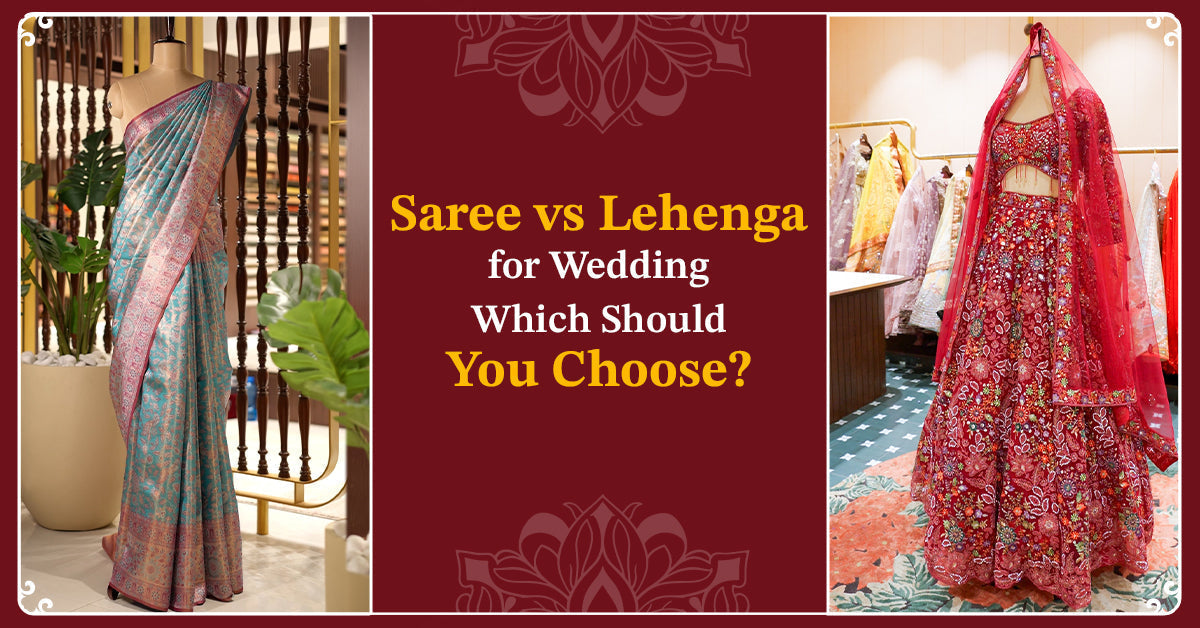
If you are deciding between a saree and lehenga for a wedding, choose a saree for timeless elegance, traditional ceremonies, comfort during long celebrations, and versatility, while a lehenga is ideal when you want a structured, contemporary look with easier movement and elaborate bridal styling. Your wedding role, ceremony, comfort, personal style, and the type of celebration should guide your decision. For a South Indian wedding, a traditional silk saree, especially a Kanchipuram silk saree, remains a meaningful choice because of its cultural significance and heirloom appeal.
Both sarees and lehengas have a special place in Indian wedding fashion. A saree brings together heritage, craftsmanship, and graceful draping, while a lehenga creates a defined silhouette and offers plenty of scope for contemporary styling.
So, which one should you wear?
The answer depends on the occasion, the role you have at the wedding, how long you will be wearing the outfit, and the kind of look you want to create.
Saree vs Lehenga for Wedding: Quick Comparison
|
Factor |
Saree |
Lehenga |
|
Traditional appeal |
Excellent |
Excellent |
|
South Indian wedding suitability |
Excellent |
Good |
|
Ease of movement |
Depends on draping |
Generally easy |
|
Comfort for long ceremonies |
Excellent with the right fabric |
Good |
|
Styling flexibility |
Very high |
High |
|
Bridal appearance |
Classic and graceful |
Grand and statement making |
|
Reusability |
Very high |
Moderate to high |
|
Heirloom value |
Very high for silk sarees |
Depends on design and fabric |
|
Best for |
Weddings, rituals, receptions, festivals |
Weddings, receptions, sangeet, celebrations |
|
Learning curve |
Requires draping |
Easier to wear once fitted |
Saree or Lehenga for a Wedding: Which Is Better?
There is no single answer because both outfits suit different wedding settings.
A saree is an excellent choice when you value tradition, elegance, cultural significance, and long term wearability. A well chosen silk saree can be worn for wedding ceremonies, festivals, family celebrations, and religious occasions for years to come.
A lehenga works beautifully when you prefer a more structured outfit with a fitted blouse, flowing skirt, and dupatta. It can create a dramatic bridal appearance and is especially popular for receptions, sangeet celebrations, engagement parties, and modern wedding events.
For traditional South Indian wedding ceremonies, a Kanchipuram silk saree is particularly appropriate. Snehalayaa Silks highlights Kanchipuram silk as a bridal and festive choice, with collections featuring traditional zari work and a range of rich jewel tones and softer shades.

When Should You Choose a Saree for a Wedding?
A saree may be the right choice if you want a graceful and traditional appearance that reflects Indian textile heritage.
1. You Prefer Traditional Wedding Fashion
Sarees have been part of Indian wedding traditions for generations. Different regions have their own weaving traditions, draping styles, fabrics, and bridal customs.
For South Indian weddings, Kanchipuram silk sarees remain a popular choice because of their rich silk texture, zari craftsmanship, and cultural importance.
2. You Want an Heirloom Outfit
A high quality silk saree can become a treasured part of your wardrobe. Many brides preserve their wedding sarees and pass them to the next generation.
This makes a traditional silk saree a meaningful investment for someone who values craftsmanship and family traditions.
3. You Need One Outfit for Multiple Occasions
One of the biggest advantages of a saree is its versatility.
The same saree can be styled differently for:
- ● Wedding ceremonies
- ● Receptions
- ● Engagements
- ● Festivals
- ● Religious functions
- ● Family celebrations
Changing the blouse design, jewellery, hairstyle, and draping technique can completely transform the appearance.
4. You Want More Styling Flexibility
Sarees offer many possibilities for personal styling. You can experiment with:
- ● Traditional bridal draping
- ● Classic Nivi draping
- ● Open pallu styling
- ● Pleated pallu styling
- ● Statement blouses
- ● Temple jewellery
- ● Contemporary jewellery
The right draping style can change the entire character of your wedding look. Snehalayaa Silks already covers several Kanjivaram saree draping styles, making this a useful internal content connection for readers interested in styling their saree.
When Should You Choose a Lehenga for a Wedding?
A lehenga may suit you better if you prefer a structured silhouette and a contemporary wedding appearance.
1. You Want a Modern Bridal Look
Lehengas are popular for brides who want a grand, fashion focused appearance. The combination of a detailed blouse, flared skirt, and dupatta creates a complete outfit without requiring traditional saree draping.
2. You Prefer Easy Movement
A lehenga can be practical for celebrations that involve dancing, socialising, and moving between different areas of a venue.
The skirt provides freedom of movement, while the dupatta can be styled according to your preference.
3. You Love Detailed Embellishment
Lehengas provide plenty of space for embroidery, sequins, zari, threadwork, stones, and other decorative elements.
They can be styled with:
- ● Statement necklaces
- ● Maang tikka
- ● Chooda
- ● Waist belt
- ● Embellished footwear
- ● Decorative dupatta
4. You Are Attending a Reception or Sangeet
A lehenga can be an especially attractive choice for evening receptions and sangeet celebrations where the dress code is more contemporary.
For these occasions, you can explore lighter fabrics, pastel colours, metallic details, or modern embroidery.
Saree vs Lehenga: Which Is More Comfortable?
Comfort depends on the fabric, fit, weight, and construction of the outfit.
A lightweight saree made from a comfortable fabric can be easy to wear for several hours. However, the draping needs to be secured properly so that you can move comfortably throughout the celebration.
A lehenga may feel easier for someone who is not familiar with saree draping. The fitted waist and structured skirt provide a defined silhouette, while the dupatta can be pinned securely.
For a wedding with long rituals, consider:
- ● The total weight of the outfit
- ● Weather and venue temperature
- ● Duration of the ceremony
- ● Number of activities
- ● Ease of sitting and walking
- ● Type of footwear
If you are attending a traditional ceremony that lasts several hours, comfort should be one of your main considerations.
Saree vs Lehenga for the Bride
For brides, the decision often depends on the wedding culture and ceremony.
A saree is a beautiful choice for traditional wedding rituals, especially in South Indian weddings. A Kanchipuram silk bridal saree with rich zari work can create a classic bridal appearance while carrying cultural and family significance.
A lehenga can be ideal for receptions, engagement ceremonies, sangeet events, and celebrations where the bride wants a more contemporary silhouette.
Many modern brides choose different outfits for different events. A traditional silk saree may be reserved for the main ceremony, followed by a lehenga or contemporary saree for the reception.
Saree vs Lehenga for Wedding Guests
Wedding guests have more freedom when choosing between a saree and lehenga.
Choose a saree if you want:
- ● Elegant traditional style
- ● A refined appearance
- ● Easy reuse after the wedding
- ● A sophisticated look that does not overpower the bride
Choose a lehenga if you want:
- ● A contemporary festive appearance
- ● A statement outfit
- ● A comfortable option for dancing
- ● A more structured silhouette
If you are attending a South Indian wedding, a Kanchipuram silk saree can be an elegant choice for a wedding guest. The key is to select colours and embellishments appropriate for the event while keeping the bridal look distinctive.
Which Is Better for a South Indian Wedding?
For a traditional South Indian wedding, a silk saree is often the more culturally appropriate choice, particularly for the main wedding ceremony.
Kanchipuram silk sarees are closely associated with South Indian bridal traditions and are valued for their silk quality, vibrant colours, intricate zari borders, and enduring craftsmanship. Traditional red and gold combinations remain popular, while modern brides are also exploring colours such as maroon, emerald, pink, pastel shades, and other contemporary combinations.
For the reception, engagement, or pre wedding celebration, a lehenga can bring a modern touch to the wedding wardrobe.
Your final choice should reflect the ceremony, family traditions, venue, and your personal sense of style.

How to Choose Between a Saree and Lehenga
Ask yourself these five questions before making your decision.
1. What Is the Wedding Ceremony?
A traditional ceremony may call for a saree, while a modern reception may suit a lehenga.
2. How Long Will You Wear It?
For long ceremonies, choose an outfit that feels comfortable throughout the event.
3. What Is Your Personal Style?
If you love traditional textiles and graceful draping, a saree may feel more natural.
If you prefer structured silhouettes and elaborate embroidery, a lehenga may suit your style.
4. Will You Wear It Again?
Consider how often you can reuse the outfit.
A versatile silk saree can work for future weddings, festivals, and family celebrations. A lehenga can also be reused by changing the blouse or styling the dupatta differently.
5. What Does the Wedding Tradition Expect?
The wedding culture and ceremony can influence the most appropriate choice. When family customs are important, traditional attire may hold greater significance.
Saree vs Lehenga: Which One Should You Finally Choose?
Choose a saree if you want timeless elegance, traditional appeal, versatility, and an outfit that can become part of your wardrobe for years.
Choose a lehenga if you want a structured silhouette, contemporary styling, easy movement, and a statement look for a modern celebration.
For a traditional South Indian wedding, a Kanchipuram silk saree is a particularly meaningful choice. For receptions, sangeet celebrations, and contemporary wedding events, a lehenga can create a stylish and festive appearance.
The best wedding outfit is ultimately the one that makes you feel comfortable, confident, and connected to the occasion.
Frequently Asked Questions
Is a saree or lehenga better for a wedding?
A saree is ideal for traditional ceremonies and timeless elegance, while a lehenga suits modern celebrations and structured styling. Your choice should depend on the ceremony, comfort, and personal style.
Is a saree more comfortable than a lehenga?
Comfort depends on the fabric, weight, fit, and styling. A lightweight saree can be comfortable for long ceremonies, while a lehenga may offer easier movement for celebrations involving dancing and socialising.
Should I wear a saree or lehenga to a South Indian wedding?
For a traditional South Indian wedding ceremony, a Kanchipuram silk saree is a classic choice. A lehenga can work well for receptions, engagement events, and modern wedding celebrations.
Which is better for a bride, saree or lehenga?
A saree is especially suitable for traditional bridal ceremonies, while a lehenga is popular for receptions and contemporary wedding events. Many brides choose both across different wedding functions.
Can I wear a saree to a wedding reception?
Yes. A silk, designer, or contemporary saree can be an elegant choice for a wedding reception. The blouse, jewellery, and draping style can create a modern reception look.
Which is easier to wear, a saree or lehenga?
A lehenga is generally easier for someone who is unfamiliar with saree draping. A saree becomes easier to manage with proper draping and secure pinning.
What is the best saree for a South Indian bride?
Kanchipuram silk sarees are among the most traditional choices for South Indian brides. Brides can select the colour, zari work, border, and motifs based on their ceremony and personal style.
Is a silk saree a good wedding investment?
Yes. A well made silk saree can be worn for future weddings, festivals, religious occasions, and family celebrations. Traditional silk sarees can also hold sentimental and heirloom value.