Cart
0
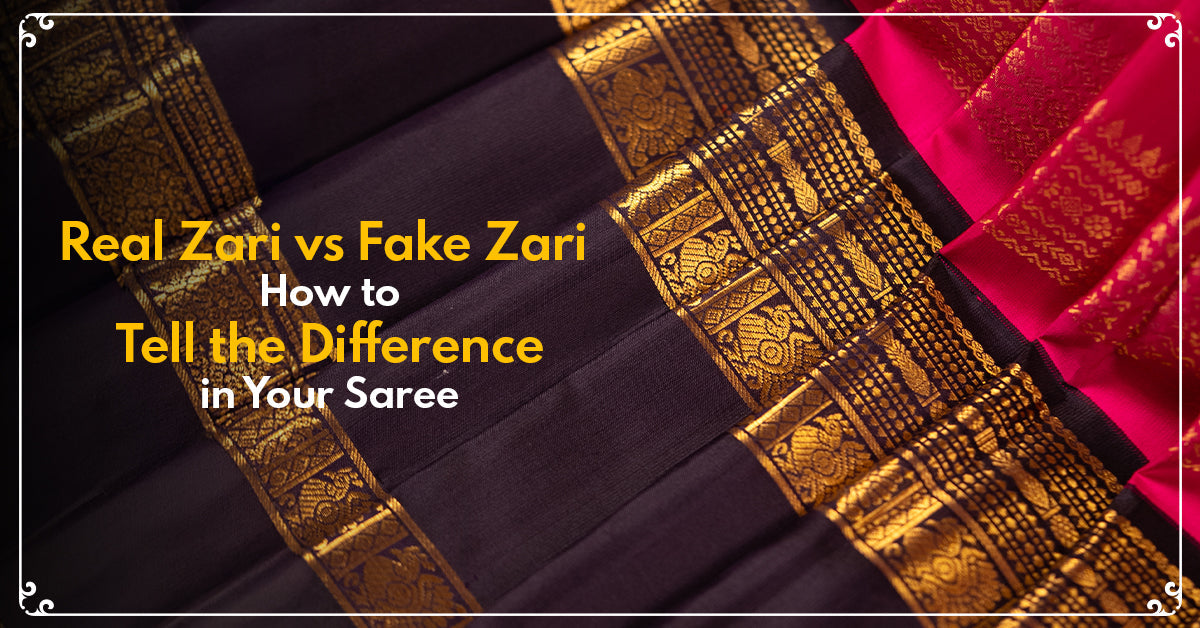
Real zari can be identified by examining its material, appearance, weight, texture, and craftsmanship. Genuine zari traditionally contains a precious metal coating, while imitation zari generally uses synthetic or metallic materials designed to look similar. Checking the zari closely, asking about its composition, and buying from a trusted silk saree seller can help you understand whether your saree contains genuine zari. This guide explains how to tell the difference between real zari and fake zari and what to consider before investing in a traditional silk saree.
Zari is one of the most distinctive elements of an Indian silk saree. It adds shine to the border, pallu, and woven motifs, giving the saree its traditional character. For generations, zari work has been closely associated with luxury silk sarees, particularly Kanchipuram silk sarees.
However, not every zari that looks bright and golden is made in the same way. Modern sarees may use different types of zari depending on the design, price, and manufacturing process. Understanding these differences can help you make a more informed purchase.
What Is Real Zari?
Traditional real zari is made using a core thread, often silk, that is wrapped with a fine layer of precious metal. Historically, gold and silver have been used in zari production. The precious metal is carefully worked into a thin form and applied around the thread to create the distinctive metallic appearance.
The exact composition of zari can vary depending on the saree and its craftsmanship. Some traditional zari may contain gold or silver, while other zari use metallic coatings that provide a similar visual effect.
When buying an expensive silk saree, it is important to ask the seller about the exact zari composition instead of assuming that every golden zari contains pure gold.
What Is Fake or Imitation Zari?
Fake zari is commonly referred to as imitation zari. It is designed to reproduce the appearance of traditional metallic zari at a lower cost.
Imitation zari may use materials such as polyester threads, metallic yarns, copper based materials, or other synthetic coatings. The quality can vary considerably.
Some imitation zari can look attractive and remain durable for everyday use. The key difference is that it does not have the same precious metal composition associated with traditional real zari.
The term fake zari does not necessarily mean that the saree itself is fake. It simply refers to the type of zari used in the weaving process.
Real Zari vs Fake Zari: Key Differences
|
Feature |
Real Zari |
Fake or Imitation Zari |
|
Material |
May contain precious metal coating |
Usually synthetic or metallic materials |
|
Appearance |
Rich and refined metallic shine |
Often brighter or more uniform |
|
Texture |
Smooth and finely woven |
Can feel lighter or less refined |
|
Durability |
Generally designed for long lasting traditional use |
Quality varies depending on material |
|
Cost |
Usually more expensive |
Generally more affordable |
|
Craftsmanship |
Often associated with premium traditional weaving |
Commonly used for accessible price points |
The table provides a general comparison. Zari quality can vary significantly, so appearance alone should not be considered conclusive proof of authenticity.
How to Identify Real Zari in a Saree
1. Look Closely at the Zari
Start by examining the zari under natural light. Genuine traditional zari often has a rich and subtle metallic appearance rather than an excessively bright shine.
Look carefully at the border and pallu. High quality weaving usually appears neat and consistent, with the zari integrated naturally into the fabric.
However, visual inspection alone cannot confirm the presence of precious metals.
2. Check the Reverse Side of the Saree
Turn the saree over and examine the reverse side of the zari work.
In a traditionally woven silk saree, the zari threads and weaving structure may be visible on the reverse side. The way the zari is incorporated into the fabric can provide useful clues about the weaving technique.
This is particularly helpful when evaluating a handwoven saree.
3. Feel the Weight and Texture
Real zari used in traditional weaving may contribute to the overall weight and richness of the saree.
Run your fingers gently over the zari border. The surface should feel well integrated with the fabric rather than appearing like a separate metallic coating.
Remember that weight alone is not a reliable test. Modern weaving techniques and different zari compositions can produce varying results.
4. Look for the Zari Mark
Some authentic silk sarees may carry certification or quality marks associated with the silk and zari used.
When buying a premium Kanchipuram silk saree, ask the seller about available certification and product details. A reputable seller should be able to explain the saree's fabric, weaving method, zari type, and relevant certifications.
5. Ask About the Zari Composition
One of the simplest ways to understand the zari in a saree is to ask the seller directly.
Questions you can ask include:
- What type of zari is used?
- Does the zari contain silver?
- Does it have a gold coating?
- Is the saree handwoven?
- Is the zari tested or certified?
- What certification is available for the saree?
A trustworthy seller should provide clear information about the product rather than making vague claims about its zari.

Can You Test Real Zari at Home?
Many traditional methods are suggested online for checking zari authenticity at home. These include rubbing the zari, scratching the surface, or using chemical tests.
These methods should be approached carefully.
Rubbing or scratching can damage the saree. Chemical testing may also affect the fabric or zari. A simple home test cannot reliably determine the precise metal composition of zari.
If you are purchasing a high value saree and want to verify the precious metal content, professional testing is a safer option.
Does Real Zari Mean Pure Gold?
Not necessarily.
The term real zari can refer to zari made using genuine precious metal content, but the exact composition can differ. Traditional zari may involve silver with a gold coating or other metal combinations.
Therefore, buyers should ask for specific information about the zari rather than relying only on the phrase real zari.
If a seller claims that a saree contains pure gold zari, ask for details about the gold content and supporting certification.
How to Check Zari in a Kanchipuram Silk Saree
Kanchipuram silk sarees are known for their rich silk fabric, traditional weaving, detailed borders, and intricate zari work.
When purchasing a Kanchipuram silk saree, examine the following:
- The quality of the silk fabric
- The precision of the weaving
- The zari work on the border and pallu
- The reverse side of the zari
- The saree's certification
- The seller's reputation
The details provided about the zari composition
For buyers looking for authentic Kanchipuram silk sarees, it is important to consider the entire saree rather than judging authenticity only by the appearance of the zari.
The silk quality, weaving technique, craftsmanship, and certification all contribute to the value of the saree.
Why Does Real Zari Cost More?
Traditional zari production involves skilled craftsmanship and, depending on its composition, precious metal content.
The cost of a saree can also depend on the quality of silk, weaving time, intricacy of the design, craftsmanship, and the amount of zari used.
A saree with intricate zari work can require considerable time and skill to produce. These factors contribute to the final price.
However, a higher price alone does not guarantee genuine zari. Buyers should always consider the seller's credibility and ask for clear product information.
Is Imitation Zari Bad?
Not necessarily.
Imitation zari can be a practical choice for buyers who want the appearance of traditional zari at a more accessible price. It is commonly used in sarees designed for regular wear, festive occasions, and fashion collections.
The important point is transparency.
If a saree is sold with imitation zari, the seller should clearly communicate this information. Buyers can then choose a saree based on their preferences and budget.
How to Buy a Saree With Genuine Zari
Before purchasing a premium zari saree, consider these steps:
-
Buy from an established and trusted silk saree retailer.
-
Ask about the exact zari composition.
-
Check whether the saree has relevant certification.
-
Examine the weaving and zari work carefully.
-
Ask whether the saree is handwoven or powerloom produced.
-
Request detailed product information before making a high value purchase.
-
Keep the invoice and product documentation after purchase.
-
Avoid relying solely on the color or shine of the zari.
These simple steps can help you make a more informed decision when investing in a traditional silk saree.
Frequently Asked Questions About Real Zari and Fake Zari
How can I tell if zari is real?
You can examine the zari's appearance, weaving, texture, and reverse side, but these checks cannot conclusively prove precious metal content. For expensive sarees, ask the seller for specific composition details and certification.
What is the difference between real zari and fake zari?
Real zari may contain precious metal content, depending on its composition. Fake or imitation zari generally uses synthetic or metallic materials designed to create a similar appearance.
Does real zari turn black?
The appearance of zari can change over time depending on the metal composition, storage conditions, humidity, and exposure to chemicals. Tarnishing can occur with certain metals, but it is not by itself definitive proof of authenticity.
Can I test zari with a magnet?
A magnet test is not a reliable way to identify genuine zari. Zari can contain different materials, and the test cannot establish the exact metal composition.
Is pure gold used in saree zari?
Traditional zari can involve gold and silver, but the exact composition varies. Buyers should ask the seller for specific details about the metal content instead of assuming that all golden zari is pure gold.
Is real zari worth buying?
For buyers who value traditional craftsmanship and precious metal content, genuine zari can be an important part of a premium saree. The decision should depend on the saree's quality, craftsmanship, composition, certification, and price.
How do I identify genuine Kanchipuram silk sarees?
Look at the silk quality, weaving, zari work, traditional construction, certification, and seller credibility. A genuine Kanchipuram silk saree should be evaluated as a complete product rather than based on zari appearance alone.

Conclusion
Understanding the difference between real zari and fake zari can help you shop for silk sarees with greater confidence. Genuine zari is associated with traditional craftsmanship and may contain precious metal content, while imitation zari is designed to offer a similar appearance at a lower cost.
The most reliable approach is to look beyond the shine. Check the saree's weaving quality, examine the zari carefully, ask about its composition, and choose a trusted seller who provides clear product information.
When investing in a premium silk saree, authenticity, craftsmanship, and transparency matter. Taking a little time to understand the zari can help you choose a saree that matches your expectations and budget.